
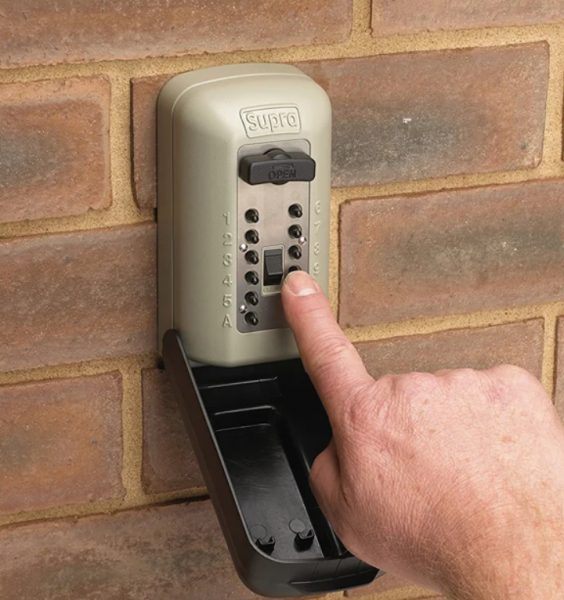
Forgot the code to your key safe? Unfortunately, most key safes cannot be reset while locked. Security-certified key safes are designed to prevent unauthorised access, meaning the reset mechanism is typically only available once the correct code has been entered and the door is open.
If you’ve lost the combination, don’t panic. There are several legitimate options that may help you regain access and, depending on the model, reset the code safely.
The quick answer
Most key safes cannot be reset without first opening them using the correct code.
If you’ve forgotten the combination, your options are usually to:
- Check whether the code has been recorded.
- Contact the previous owner or administrator.
- Identify the key safe manufacturer and model.
- Contact the manufacturer’s support team.
- Seek assistance from a qualified locksmith.
- Replace the key safe if recovery isn’t possible.
For security reasons, reputable manufacturers do not provide methods for bypassing locked key safes.
Why can’t key safes be reset whilst locked?
A common misconception is that key safes have a hidden reset button or universal override code.
In reality, quality key safes are designed to prevent exactly that.
Allowing anyone to reset a locked key safe from the outside would create a serious security weakness, making it easier for unauthorised individuals to gain access to the keys stored inside.
That’s why most mechanical and digital key safes only allow code changes once the door has already been opened.
What to do if you’ve forgotten your key safe code
1. Look for existing records
Before considering replacement, check whether the code has been stored securely elsewhere.
Possible locations include:
- Property handover documents
- Installation paperwork
- Maintenance records
- Password managers
- Secure notes applications
- Records held by family members or carers
Many lockouts are resolved simply by locating the original documentation.
2. Contact the previous owner or responsible party
If the key safe was already installed at the property, someone else may still have the combination.
This could include:
- Previous homeowners
- Landlords
- Letting agents
- Care providers
- Facilities managers
- Property maintenance companies
Obtaining the original code is often the quickest and least expensive solution.
3. Identify the key safe model
Different manufacturers offer different support options.
Look for:
- Brand name
- Model number
- Serial number
You may find these on:
- Installation instructions
- Product labels
- Original packaging
- Purchase records
Having this information ready can make it easier for the manufacturer to advise on next steps.
4. Contact the manufacturer
Some manufacturers can assist legitimate owners who have lost their combination.
Depending on the product, they may:
- Verify ownership
- Confirm model-specific procedures
- Recommend approved service providers
- Advise whether replacement is required
For obvious security reasons, manufacturers rarely disclose any method that would compromise the security of a locked key safe.
5. Speak to a qualified locksmith
A professional locksmith may be able to assess your options if the code cannot be recovered.
They can advise on:
- The most cost-effective solution
- Whether the unit can be serviced
- Whether removal is required
- Suitable replacement products
The available options will vary depending on the key safe’s construction and security rating.
When is replacement the better option?
In many cases, replacing the key safe may be the most practical solution.
This is particularly true if:
- The key safe is several years old.
- The model has been discontinued.
- Manufacturer support is unavailable.
- The unit shows signs of wear or damage.
- Locksmith costs exceed replacement costs.
Modern key safes often provide improved weather resistance, increased capacity and enhanced protection against attack.
How to reset a key safe once it’s open
If you know the current code and can open the key safe, resetting it is normally straightforward.
While procedures vary by manufacturer, the process typically involves:
- Opening the key safe using the current combination.
- Locating the code change mechanism inside the door.
- Following the manufacturer’s instructions to select a new code.
- Testing the new combination several times before closing the door.
Important: Always test the new code with the door open. This simple step can help prevent accidental lockouts.
Common reasons people get locked out of key safes
Forgotten combinations aren’t the only cause of lockouts.
Other common issues include:
- Incorrectly recorded codes
- Stiff or worn keypad mechanisms
- Dirt or debris affecting operation
- Misaligned doors
- Accidental code changes
- User error when entering the combination
If your key safe won’t open despite using the correct code, the issue may be mechanical rather than code-related.
Frequently asked questions
Can you reset a key safe without opening it?
In most cases, no. Key safes are intentionally designed so that the code change or reset mechanism is only accessible once the door has been opened using the correct combination. This security feature helps prevent unauthorised individuals from simply resetting the lock and gaining access to the keys stored inside.
If you’ve forgotten the code, your best option is to try and recover the original combination through documentation, the previous owner, a landlord, or the manufacturer. If this isn’t possible, a qualified locksmith may be able to advise on the next steps depending on the make and model of the key safe.
Is there a master code that can open any key safe?
No. Reputable key safe manufacturers do not use a universal master code that works across all products. If a master code existed, it would create a significant security vulnerability and undermine the purpose of the key safe.
Some commercial key management systems may include administrator credentials or management features, but these are specific to individual products and are not intended to provide general access. For security reasons, manufacturers rarely disclose any override procedures and will usually require proof of ownership before providing assistance.
What should I do if I’ve forgotten my key safe code?
If you’ve forgotten the combination, start by checking any paperwork, installation records, property documents or password managers where the code may have been stored. If the key safe was already installed when you moved into the property, consider contacting the previous owner, landlord or managing agent.
If the code cannot be located, identify the manufacturer and model number of the key safe and contact their customer support team. They may be able to advise on recovery options. In some cases, replacing the key safe may prove more practical than attempting to regain access.
Can a locksmith open a key safe without the code?
A qualified locksmith may be able to assist legitimate owners who have lost access to their key safe. The exact options available will depend on the type of key safe, its security rating and whether proof of ownership can be provided.
Some locksmiths may be able to remove or replace the unit, while others may recommend contacting the manufacturer directly. Because key safes are designed to resist unauthorised entry, there is no guaranteed non-destructive solution for every model.
Why won’t my key safe open even though I know the code?
If you’re confident the code is correct, the problem may be mechanical rather than related to the combination itself. Dirt, corrosion, worn components or a misaligned door can sometimes prevent a key safe from opening properly.
Try entering the code carefully and applying gentle pressure to the door while operating the release mechanism. Avoid using excessive force, as this may cause damage. If the issue persists, consult the manufacturer’s troubleshooting guide or seek advice from a locksmith or security professional.
Can a digital key safe be reset if the batteries are dead?
Many electronic key safes include a backup power option or emergency access method that allows the owner to regain entry when the batteries are depleted. However, the exact procedure varies between manufacturers and models.
If your digital key safe has stopped responding, replace the batteries if they are accessible or consult the user manual for the recommended recovery procedure. Once access has been restored, you can usually reset the code through the internal programming controls. Read our full guide: How to Open a Digital Safe with Dead Batteries
What should I do if I’ve moved into a property with a locked key safe?
It’s fairly common for homeowners to discover an existing key safe after moving into a property. The first step should be to contact the previous owner, landlord or estate agent to determine whether the combination has been recorded.
If the code cannot be obtained, identify the make and model of the key safe and contact the manufacturer for guidance. Depending on the circumstances, it may be more practical to replace the unit entirely, particularly if its age, condition or ownership history is unknown.
Is it worth replacing an old key safe?
In many cases, yes. If a key safe is several years old, showing signs of wear, or no longer supported by the manufacturer, replacement can be a sensible investment. Modern key safes often offer improved weather protection, increased capacity and enhanced resistance against physical attack.
Replacing an older unit also provides the reassurance of knowing exactly who has access to the new code, which can be particularly important for homeowners, holiday lets and care-related applications.
How can I avoid getting locked out of my key safe again?
The best way to avoid future lockouts is to store the combination securely and ensure at least one trusted person knows how to access it if needed. Many homeowners choose to keep the code in a password manager or secure document rather than relying on memory alone.
Whenever you change the code, test it several times with the door open before locking the key safe. It’s also good practice to review access permissions periodically and update the combination if circumstances change.
Key takeaway
If you’ve forgotten your key safe code, the safest and most effective approach is to recover the original combination, contact the manufacturer, or seek professional assistance. While it may be tempting to search for ways to bypass the lock, quality key safes are specifically designed to prevent unauthorised access.
If recovery isn’t possible, replacing the key safe is often the quickest route back to secure and reliable key storage. View our full range of key safes today: Outdoor Key Safes


