
It’s a question many homeowners ask before installing a key safe: could storing a spare key outside your property invalidate your home insurance?
The short answer is no. Installing a key safe will not usually invalidate your home insurance, and many homeowners, carers and holiday let operators use them every day without issue.
However, insurers expect policyholders to take reasonable precautions to protect their property. While the presence of a key safe alone is unlikely to affect your cover, the way it’s installed, maintained and used could become relevant if a claim is made following a burglary.
In this guide, we’ll look at how insurers typically view key safes, whether they can affect claims, and how to use one safely and responsibly.
What is a key safe?
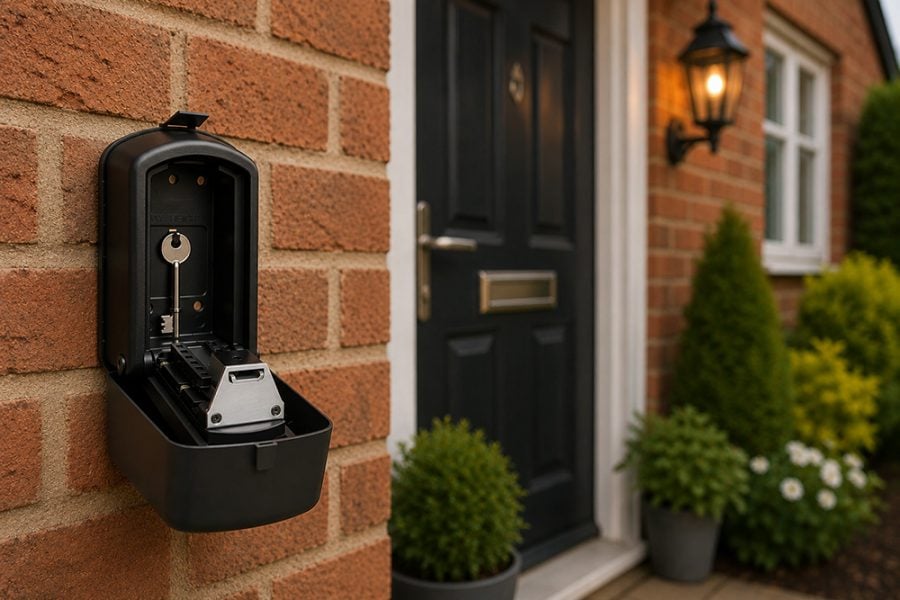
A key safe is a secure storage box that allows authorised individuals to access a spare key using a combination code.
They’re commonly used by:
- Homeowners who want emergency access to their property
- Families supporting elderly relatives
- Carers and healthcare professionals
- Holiday let owners
- Property managers and landlords
By storing a key inside a lockable container rather than hiding it outside, key safes offer a more controlled and secure way to provide access when needed. Browse our full range of key safes here: Outdoor Key Safes
Will a key safe invalidate home insurance?
In the vast majority of cases, no.
Home insurance providers don’t typically void policies simply because a key safe has been installed. In fact, a quality key safe is often viewed as a more secure option than traditional spare key hiding places.
What matters to insurers is whether reasonable security measures have been taken to protect the property.
Just as insurers expect homeowners to lock doors, secure windows and maintain their locks, they also expect any access devices, including spare keys, to be managed responsibly.
As long as a key safe is used correctly, it is unlikely to have any negative impact on your home insurance policy.
Why insurers care about key security
When investigating a burglary claim, insurers often look at how access to the property was gained.
If there is evidence of forced entry, claims are generally straightforward. However, situations involving keys can be more complex.
From an insurer’s perspective, a spare key effectively provides direct access to the property. Because of this, they may consider whether reasonable steps were taken to prevent unauthorised access.
This isn’t unique to key safes. The same principles apply if a homeowner leaves keys in an unlocked vehicle, loses house keys without taking appropriate action, or leaves a property unsecured.
The focus is usually on the circumstances surrounding the loss rather than the security product itself.
Can a key safe affect an insurance claim?
Although simply owning a key safe won’t invalidate your insurance, the circumstances surrounding a claim may be examined if a burglary occurs.
For example, an insurer may investigate whether:
- The key safe was functioning correctly
- The code had been shared appropriately
- The property was properly secured
- Reasonable precautions had been taken
This doesn’t mean claims involving key safes are routinely rejected. In reality, many claims involving properties with key safes are handled without issue.
However, if a spare key became accessible because the code had been widely distributed, was extremely easy to guess, or the safe had been left open, an insurer may ask additional questions about the security measures in place.
The key point is that responsible use matters just as much as the product itself.
Does having a key safe increase home insurance premiums?
Generally, no.
Home insurance premiums are usually calculated using factors such as:
- Property location
- Rebuild value
- Claims history
- Occupancy status
- Security features
- Local crime rates
The presence of a key safe alone is unlikely to increase the cost of your insurance.
In many situations, insurers may view a properly managed key safe as a safer alternative to hiding spare keys in locations that are well known to opportunistic burglars.
If you’re concerned about how a key safe might affect your individual policy, it’s always worth contacting your insurer directly for clarification.
Should you tell your insurance provider about a key safe?
Most homeowners are not required to notify their insurer simply because they have installed a key safe.
Unlike major security upgrades or changes that significantly alter the risk profile of a property, key safes are generally considered a practical access solution rather than a material change to the home itself.
That said, insurance policies vary between providers.
If your insurer has specific security requirements or your property has unique circumstances, such as being used as a holiday let or remaining vacant for extended periods, it’s worth reviewing your policy documents or speaking with your insurer directly.
A quick conversation can provide peace of mind and ensure there are no misunderstandings about your cover.
Are police-preferred key safes better?
While no key safe can guarantee acceptance by an insurer, choosing a high-quality product is always advisable.
Some key safes have been independently tested against recognised security standards and are widely used by local authorities, emergency services and care organisations.
These products are generally designed to offer greater resistance against common forms of attack and unauthorised access than lower-cost alternatives.
For homeowners looking to maximise security, investing in a well-reviewed, independently tested key safe can provide reassurance that the product has been assessed against established security criteria. Browse our police recommended safes: Police Recommended Outdoor Key Safes
Best practices for using a key safe securely
Like any security product, a key safe is most effective when used correctly.
To maximise security:
- Choose a quality key safe from a reputable manufacturer.
- Use a unique and difficult-to-guess code.
- Avoid obvious combinations such as birthdays or house numbers.
- Change the code periodically.
- Limit access to trusted individuals only.
- Remove access when it is no longer required.
- Check the key safe regularly for signs of wear or damage.
- Ensure the unit remains securely fixed to the wall.
Following these simple steps can help reduce risk while ensuring the convenience of having a spare key available when needed.
The bottom line
Installing a key safe will not usually invalidate your home insurance.
For most insurers, the key consideration is not whether a key safe exists, but whether it has been used responsibly as part of a wider approach to home security.
A high-quality key safe, installed correctly and managed carefully, is generally a far more secure option than hiding a spare key outside your property. By choosing a trusted product and following sensible security practices, homeowners can enjoy the convenience of emergency access without compromising the security of their home. Browse our full range of key safes: Outdoor Key Safes


